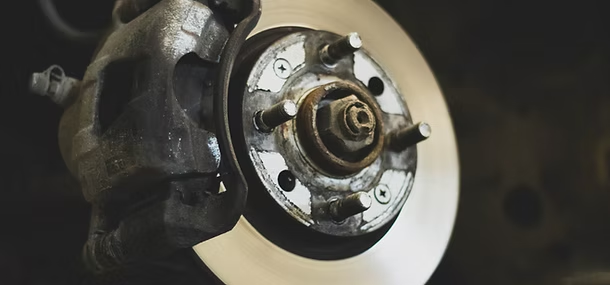
Brake Service
You hear it for the first time on the way to work. A high-pitched squeal every time you slow down. You turn up the radio. A week later it's louder. Then it starts grinding. Then one morning you press the brake pedal and it feels soft, sinking a little too far before the car slows.
That squeal is your brake pads telling you they're almost gone. Ignore it long enough and it becomes metal grinding on metal. The pad backing plate eating directly into your rotor. At that point you've turned a $200 brake job into a $600 one. And a soft spongy brake pedal isn't a minor annoyance. It means your hydraulic system is compromised. You're driving around with reduced stopping power and no idea how much margin you have left. NC humidity accelerates brake line corrosion and lowers brake fluid's boiling point, making the problem worse faster than you'd expect.
We inspect every component of your brake system including pads, rotors, calipers, and brake fluid, and give you a straight answer about what needs to be done now and what can wait. No pressure, no manufactured urgency. If we find something serious, we'll show you. If you've got life left in your brakes, we'll tell you that too.
Why This Happens
Brake pads have a friction material that gradually wears away every time you stop. Most pads last 30,000 to 50,000 miles depending on how and where you drive. City driving and mountain roads are harder on brakes than highway miles. As pads wear thin, they lose stopping power and heat up more than they should. Repeated heat cycles warp rotors (causing that pulsing vibration when you brake) and degrade brake fluid. Brake fluid absorbs moisture over time, which lowers its boiling point and creates a soft spongy pedal feel. Rust is a factor too. NC humidity corrodes brake lines and caliper slides, causing uneven wear and reduced performance.
How We Fix It
We start with a full brake inspection: measure pad thickness, check rotor condition for warping and wear, inspect calipers for sticking or leaking, and test brake fluid for moisture contamination. From there we give you a clear quote. Brake pad replacement is the most common service and we can usually complete it same day. If rotors need resurfacing or replacement, we handle that too. If the brake fluid is contaminated, a flush takes about an hour and makes a real difference in pedal feel and fade resistance.
What's Included
- Brake pad inspection and replacement
- Rotor inspection, resurfacing, or replacement
- Caliper inspection and service
- Brake fluid condition test
- Brake fluid flush (if needed)
- Full brake system test drive
Why Drivers in Hendersonville Choose LAV Motors
- Certified brake technicians with decades of experience
- We show you the worn parts before replacing anything
- Same-day service for most brake jobs
- Honest assessments, we won't replace parts that still have life in them
- Quality parts at fair prices
Common Questions
My brakes are squeaking. Is it safe to drive?
Squealing usually means your pads are getting low. You have some time, but don't wait. If it turns to grinding, you're already doing damage to the rotors and the cost goes up significantly.
Why does my brake pedal feel soft or spongy?
A soft pedal is usually caused by moisture-contaminated brake fluid, air in the brake lines, or a failing caliper. It's a safety issue. Bring it in so we can diagnose it.
How long do brake pads last?
Typically 30,000 to 50,000 miles, but it varies a lot based on driving habits and conditions. City driving, mountain roads, and heavy vehicles all wear pads faster.
Ready to Get It Fixed?
Call us or stop by. No appointment needed for most services. We're on Spartanburg Hwy in Hendersonville.